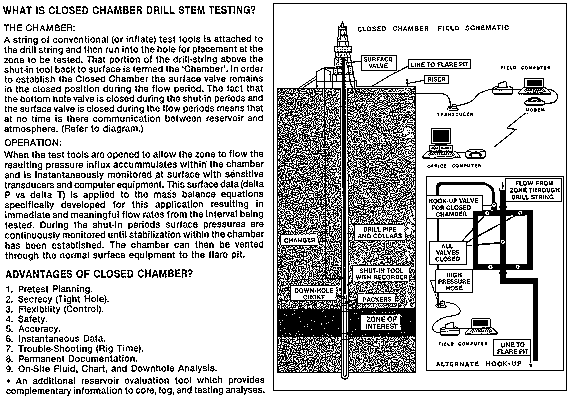
Closed Chamber Testing is a technique developed in the early 1970's whereby the inside of the drill pipe is closed off at surface, thus forming a "closed chamber". A pressure recorder is placed in the chamber at surface, and records the compression of the "fluid" within the chamber when the downhole shut-in valve is opened. Through various assumptions and calculations, best described by L.G. Alexander in his 1976 paper SPE 6024, flow rates and fluid properties can be derived from the pressure changes measured at surface.
Closed chamber testing is used primarily for:
1. Control of fluid / gas flow at surface (H2S control, secrecy etc.);
2. Measurement of low flow rates from low permeability reservoirs;
3. Indirect measurement of downhole pressure response from surface.
see: Alexander L.G. , Well Evaluation by Closed - Chamber Drill stem Testing, Petroleum Society of CIM, 1973.